

When shopping for fashion online, the hardest part is often deciding between similar products. Two shirts look almost the same, prices are close, and both claim to be “high quality.” This is where many people rush and later regret their choice. Comparing fashion products properly doesn’t mean spending hours—it just means knowing what to look at and how to think before clicking “buy.”
1. Start With Your Actual Need, Not the Product Hype
Before comparing products, be clear about why you need the item. Is it for daily wear, work, a special event, or occasional use? When you know the purpose, half of the comparison becomes easy. A casual shirt and a formal shirt may look similar online, but they serve very different needs. Always compare products based on how you will actually use them.
2. Don’t Compare Photos Alone
Many shoppers compare products only by looking at images. This is risky. Photos are styled, edited, and taken under perfect lighting. Two items may look similar in pictures but feel completely different in real life. Photos should be your starting point, not your final decision. Always go deeper than appearance.
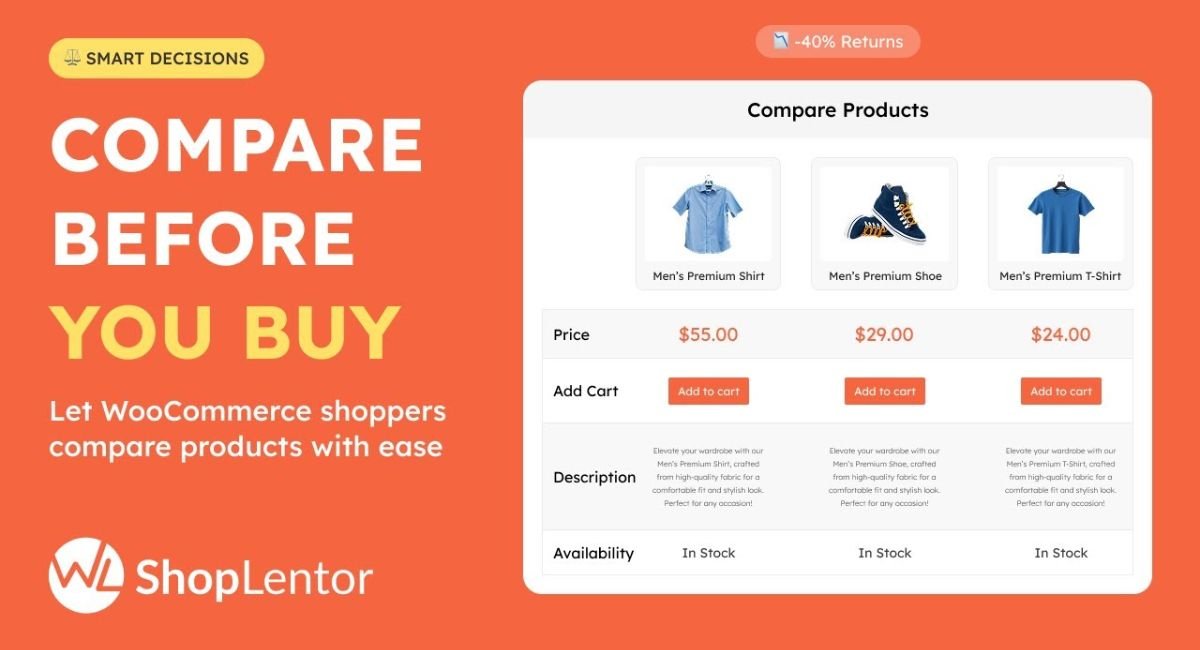
3. Read Product Descriptions Side by Side
Product descriptions reveal more than most people realize. When comparing two items, open both descriptions and read them carefully. Look at fabric type, fit, leading, thickness, and care instructions. One item may be cotton-rich while the other is mostly synthetic. These details directly affect comfort and durability.
4. Compare Fabric Quality, Not Just Fabric Names
Seeing the word “cotton” or “polyester” is not enough. Look at fabric percentages if available. A higher cotton percentage usually feels better for daily wear. Fabric blends can be good too, but very cheap blends often sacrifice comfort. When comparing products, think about how the fabric will feel after hours of wear, not just how it looks.
5. Check Size Charts Carefully for Each Product
Never assume that two similar products will fit the same way. Different brands use different sizing standards. Compare size charts for both items and match them with your body measurements. One product may offer a relaxed fit while the other runs tight. Fit can make or break your experience, even if everything else looks perfect.
6. Use Customer Reviews as a Comparison Tool
Reviews are extremely useful when comparing products. Read reviews for both items and notice patterns. If one product has repeated complaints about sizing or fabric quality and the other doesn’t, that’s a clear signal. Reviews help you understand which product performs better in real life, not just on the product page.
7. Compare Price With Value, Not Just Cost
A lower price doesn’t always mean a better deal. One product may cost slightly more but offer better fabric, stitching, and durability. Another may be cheaper but wear out quickly. When comparing prices, think about how long you’ll use the item. Value comes from how often and how comfortably you wear it.
8. Look at Return and Exchange Policies
Return policies are often ignored during comparison, but they matter a lot. One product may be easier to return if it doesn’t fit or meet expectations. Flexible return options reduce risk. When two products feel similar, choosing the one with a better return policy is often the smarter move.
9. Think About Styling and Versatility
Ask yourself how many outfits you can create with the item. Can it be worn casually and dressed up? Does it match clothes you already own? When comparing fashion products, versatility is a hidden advantage. The more ways you can wear something, the better value it usually offers.
10. Take a Pause Before Making the Final Choice
After comparing everything, step away for a few minutes. Rushed decisions often lead to regret. When you return, one option usually feels like the better choice. Trust that feeling. If neither product feels right after comparison, it’s okay to skip both. Good fashion choices don’t need pressure.
Comparing fashion products online is less about finding the “perfect” item and more about avoiding bad choices. When you slow down, check details, and think practically, shopping becomes easier and more satisfying. Over time, these small habits help you build a wardrobe you actually enjoy wearing.